

Most people who come to Bali in search of spiritual experience head to Ubud. They visit Tirta Empul, walk the rice terraces of Tegallalang, take a yoga class, and find something genuine in among a great deal that has been designed for their benefit. But for travellers interested in Buddhist retreats in Bali, the north of the island offers an experience that goes considerably deeper, and with considerably fewer people around.
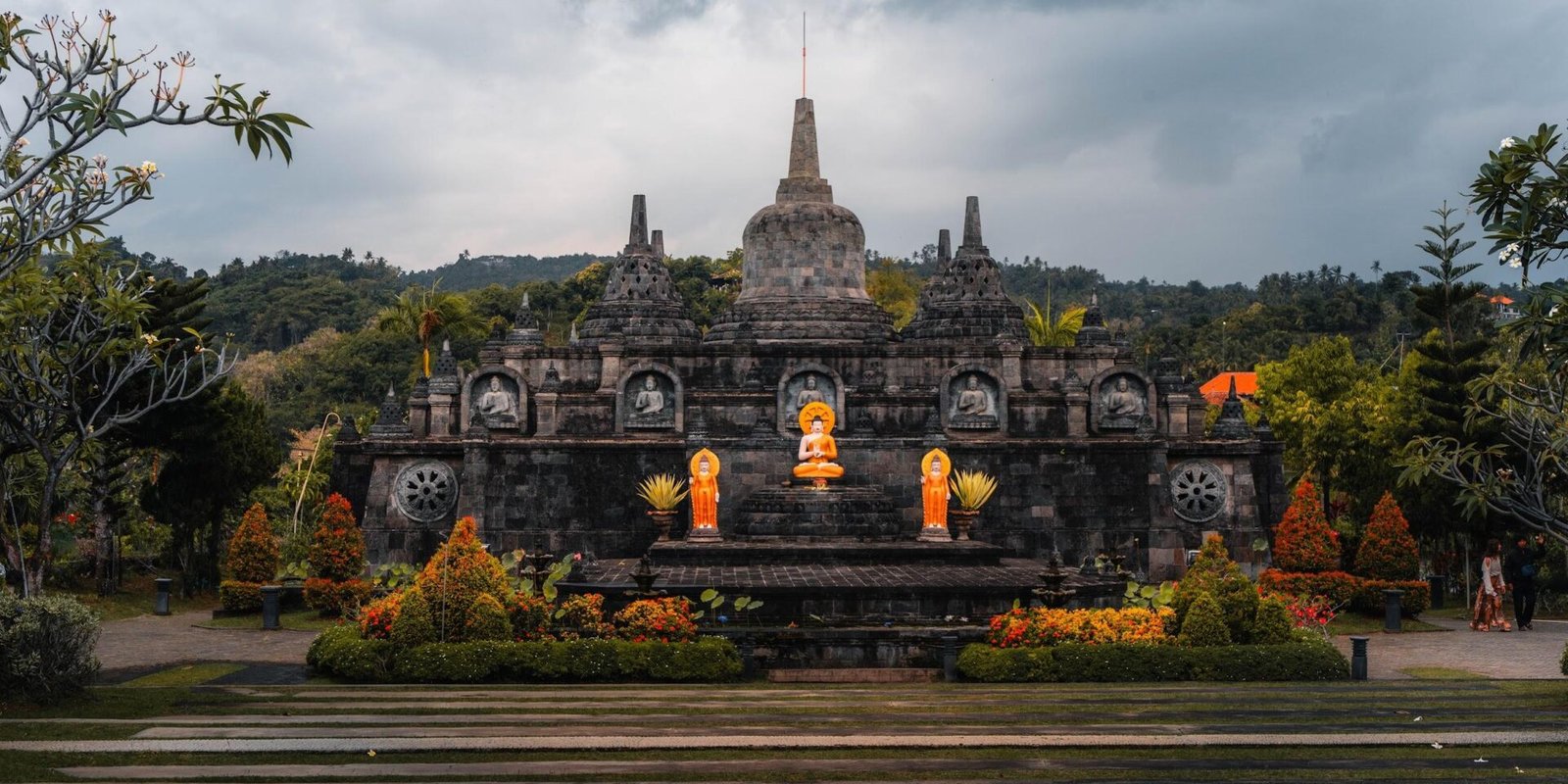
North Bali holds Brahmavihara-Arama, the largest Buddhist monastery on the island. It sits above the hot springs of Banjar, surrounded by lush hillside gardens, with views across the valley that shift with the mist and the light. This is not a tourist attraction that happens to have a spiritual function. It is a working monastery that happens to be worth visiting.
Brahmavihara-Arama: What It Is and Why It Matters
Brahmavihara-Arama was founded in 1970 and follows the Theravada Buddhist tradition. Its name references the four divine abodes in Buddhist philosophy: loving-kindness, compassion, empathetic joy, and equanimity. They shape the atmosphere in ways that are difficult to quantify but easy to feel.
The monastery grounds are arranged across terraces on the hillside. Meditation halls, monks’ quarters, shrines, and garden spaces are connected by stone paths lined with frangipani and lotus. The architecture draws on both Balinese and Southeast Asian Buddhist design traditions, with gilded roof tiers, carved stone guardians, and an enormous reclining Buddha figure among the most striking features.
Visitors are welcome without appointment during opening hours. But the standard dress code for any Balinese sacred site applies. Sarong or long covering on the lower body, and shoulders covered.
Buddhism in the Context of Bali’s Spiritual Landscape
Bali is predominantly Hindu, and its spiritual life is expressed through daily offerings, temple ceremonies, and a calendar that structures time around the sacred. Buddhism arrived on the island centuries ago and has coexisted with Hinduism.
For visitors seeking a contemplative experience rather than a cultural overview, North Bali provides both the setting and the specific site that makes such an experience possible.
Why Munduk Moding Plantation Nature Resort Is the Ideal Base for Buddhist Retreats in Bali
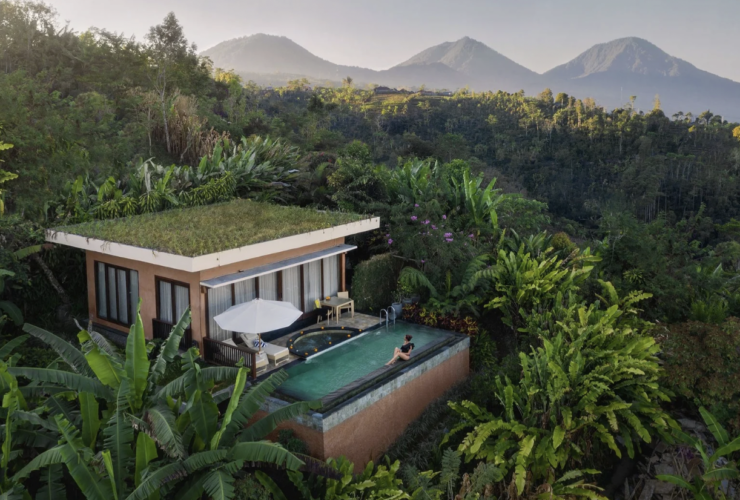
Brahmavihara-Arama is approximately thirty minutes by road from Munduk Moding Plantation, which sits in the hills above Desa Gobleg at around 1,200 metres above sea level. For guests visiting the monastery as part of your Buddhist Retreats in Bali, MMP provides overnight accommodation, dining, and the full sensory experience of living within the North Bali landscape.
The resort was founded in 2007 and developed in close collaboration with the surrounding villages. Its team of around 150 Balinese colleagues is entirely local, and its guiding philosophy, Tri Hita Karana, seeks harmony between people, the environment, and the spiritual world.
The accommodation ranges from garden-view suites to multi-bedroom pool villas, all oriented toward valley views that extend to the coast on clear days. The award-winning infinity pools are among Asia’s recognised top ten. The grounds are planted with coffee, cloves, vanilla, and tropical gardens that keep the air fragrant and the environment alive with birdlife.
Wellness, Contemplation, and the Highland Day
A stay designed around the monastery visit might move like this. The morning begins in the plantation with the cool air and the birds. Breakfast on the terrace. A drive to Brahmavihara-Arama before the midday heat, time in the gardens and the meditation halls, perhaps a walk to the Banjar hot springs afterward.
Return to the resort in the early afternoon for the Bamboo Spa, which offers Balinese massage treatments, an infrared sauna, and yoga sessions in an open-air jungle pavilion. The cool highland climate makes yoga unusually pleasant, and the silence around the pavilion contributes something the session itself cannot manufacture.
The evening might mean the MiMPi Restaurant and its six-course Discovery Menu, which draws on the plantation’s own gardens and the seasonal produce of North Bali. Or Warung Bongkot for something simpler and more local in register. Or just the Sunset Bar and the light fading over the valley.
The rhythm of the highland day is slower than the coast, and deliberately so. This is a landscape that rewards not filling every hour.
What Else the North Offers for Contemplative Travellers
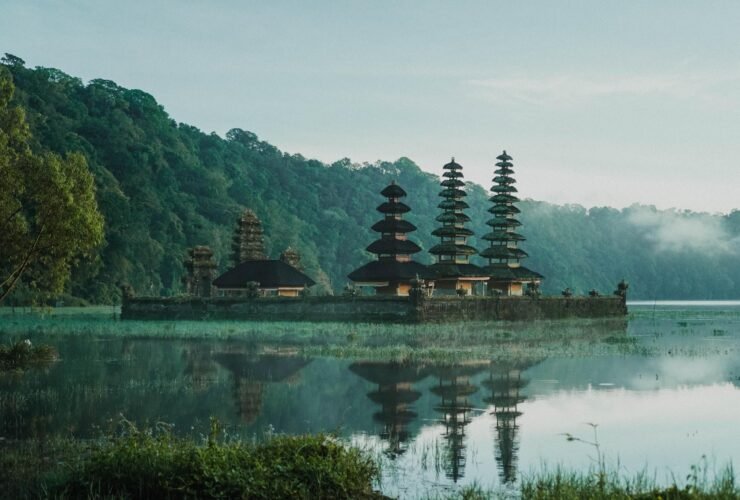
Beyond Brahmavihara-Arama, the highlands of North Bali hold a range of experiences that suit the contemplative temperament. Pura Ulun Danu Bratan, the famous lake temple on the southern edge of the highland region, sits at the crater of Danau Bratan and is most beautiful in the early morning when the mist sits low on the water. Pura Lempuyang in East Bali, while further afield, is another site of significant spiritual weight often visited from a highland base.
Within MMP’s own activities programme, hiking trails lead to highland waterfalls and the shores of Danau Tamblingan and Danau Buyan, twin crater lakes that remain among the quietest and most beautiful stretches of North Bali. Explore the full activities programme to see what best suits the time you have.